How to Create Stylish Arabic Text Online
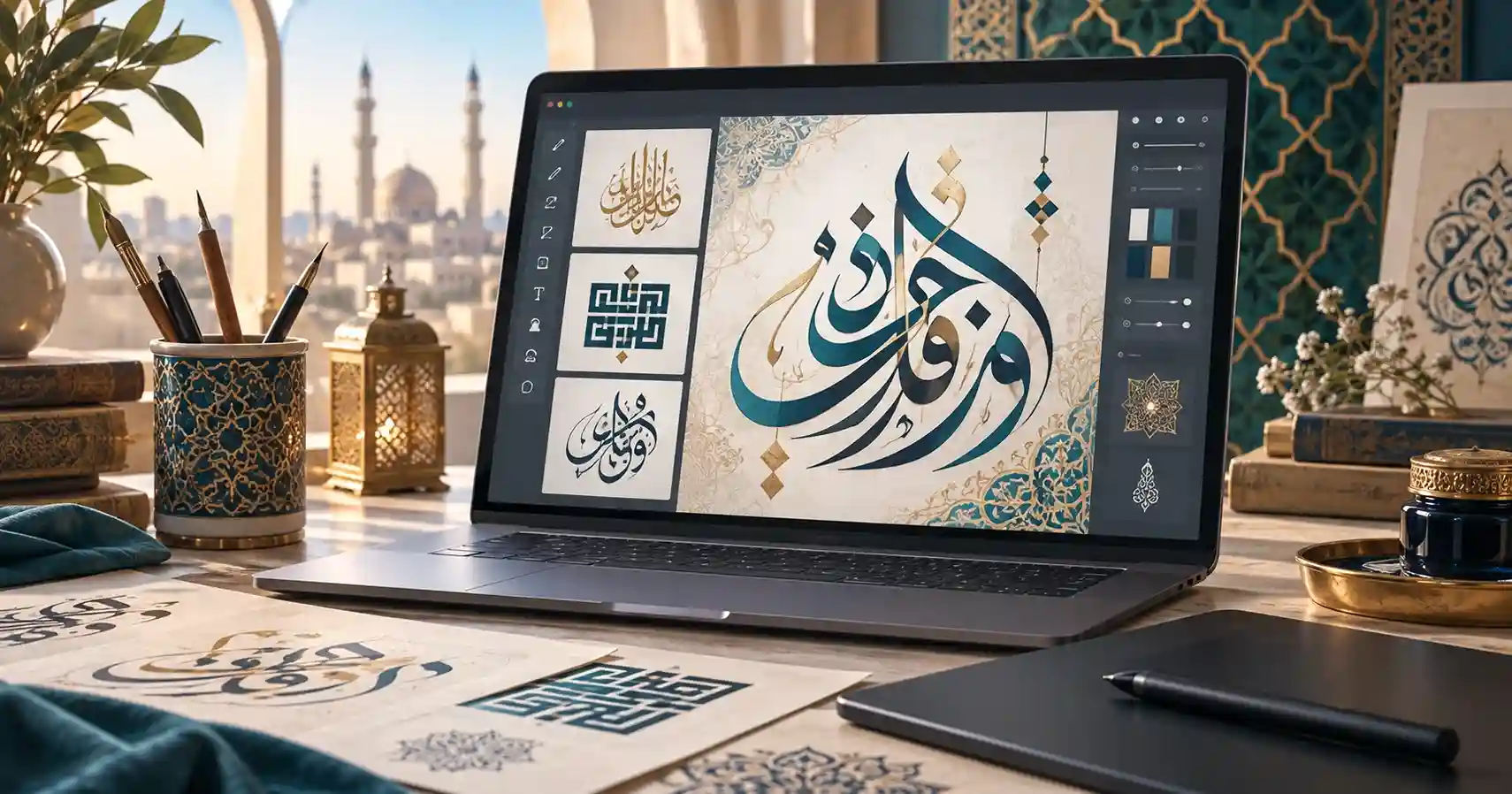
Arabic script has a natural elegance built into its shapes. Even plain typed text carries a flowing quality that Latin letters rarely match, which is part of why Arabic typography has always been treated as an art form rather than just a way to communicate. Long before digital tools existed, calligraphers spent entire careers perfecting how to create stylish Arabic text online, and that visual richness is still what people respond to today when they see a well designed piece of Arabic text. When someone wants to go beyond ordinary typing and add real style, whether for a poster, a social media caption, a logo, or a message to a friend, they are stepping into the world of Arabic calligraphy and decorative fonts.
The tricky part is that traditional Arabic calligraphy takes years to master by hand. Letters connect differently depending on their position in a word, and each style, from Thuluth to Diwani, has its own rules for proportion, spacing, and stroke thickness. Most people who want a beautiful result simply don’t have the time, tools, or training to draw it themselves, and that gap is exactly why online generators have become so popular. A good Arabic font generator can now turn a plain sentence into something that looks hand crafted in a matter of seconds, no ink or brush required.
This shift matters because demand for Arabic design work has grown well beyond what professional calligraphers alone can meet. Businesses need Arabic branding, individuals want personalized gifts, and content creators need eye catching visuals on a daily basting basis. This post walks through why Arabic script lends itself so well to stylish design, how you can actually create that design online without any artistic background.
Why Arabic Script Naturally Lends Itself to Style
The Beauty of Connected Letters
Unlike English, where most letters stand apart from one another, Arabic letters join together within a word, shifting shape depending on whether they sit at the start, middle, or end of that word. A single letter can look almost unrecognizable depending on its position, which gives the whole script a sense of continuous movement even in a plain line of text.
Calligraphers have spent centuries stretching, curving, and layering these connections into distinct traditions, each with its own visual personality. That underlying structure, letters that bend and merge rather than sit rigidly apart, is what makes Arabic text so responsive to font design today. A font doesn’t need to add much to already look expressive, it just needs to shape that natural connection well.
How Font Choice Changes the Feeling of a Word
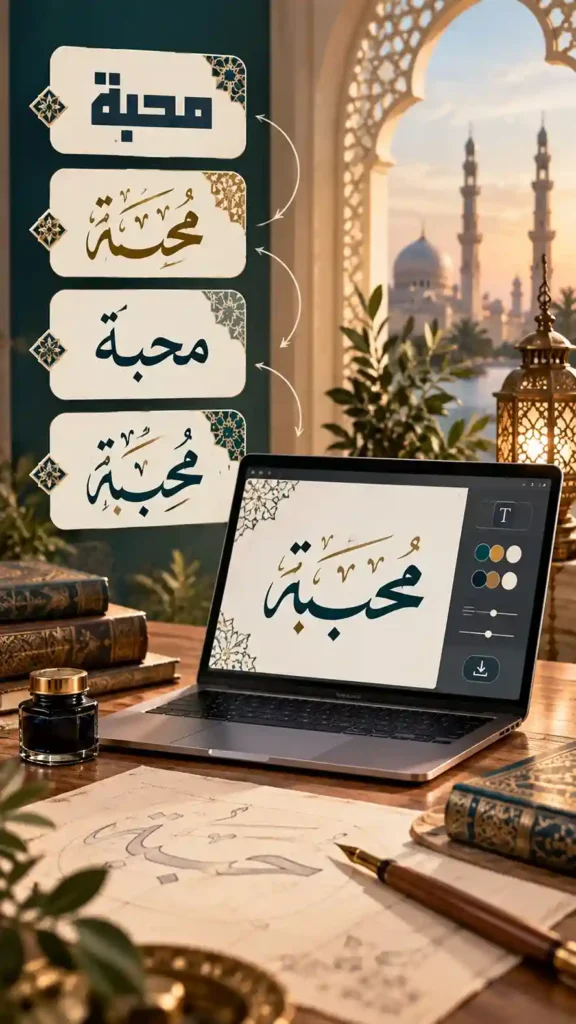
The same phrase can feel completely different depending on the font applied to it, sometimes more so than in Latin script. A sharp, angular Kufi style feels modern and architectural, closer to something you’d see on a building or a tech brand’s logo. A flowing Diwani script feels formal and almost ceremonial, which is why it shows up so often on official documents and invitations. Naskh, the style most people actually read comfortably in books and articles, feels neutral and clean, built for legibility rather than drama. Thuluth sits somewhere in between, decorative enough for titles and religious text while still holding a clear structure.
The Arabic font generator lets you
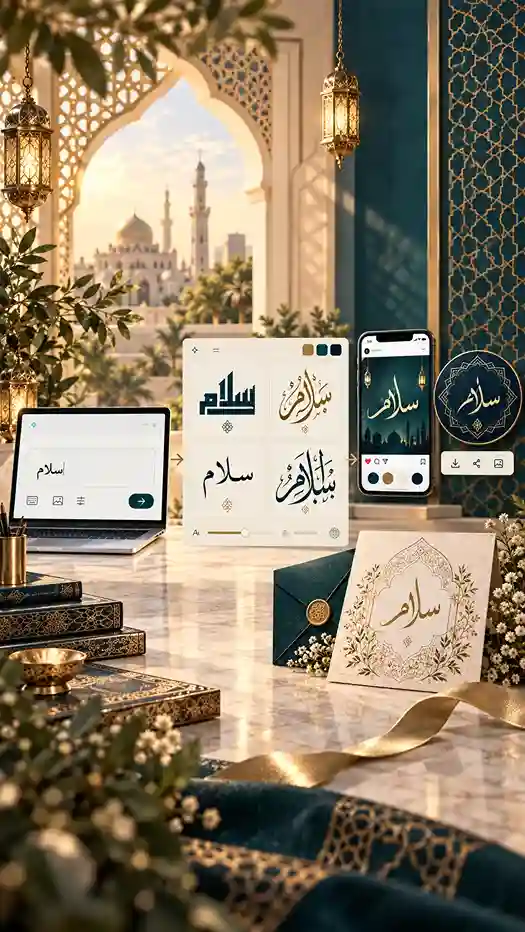
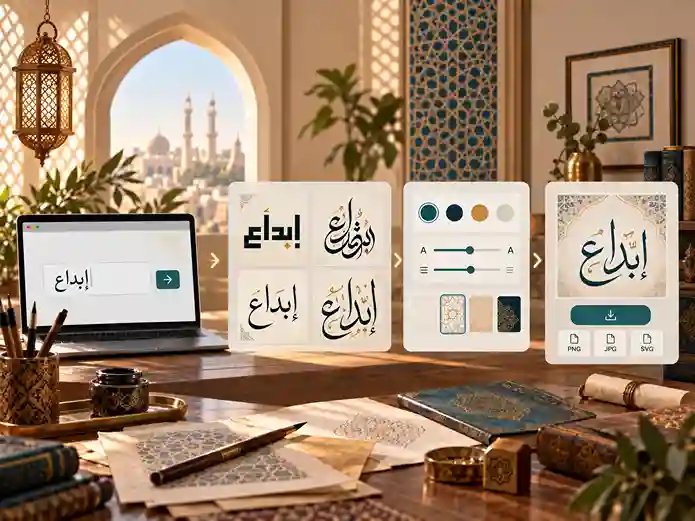
The Arabic font generator lets you type or paste Arabic text and preview it instantly across a range of Arabic font styles — modern, traditional Naskh, Kufi-inspired, handwriting and decorative. Adjust the color, background, size and alignment, then download your design as a high-quality PNG or JPG image.
This tool created-paste text tool instead.
Steps to Turn Plain Text into Stylish Arabic Design
- Open an arabic font generator and type or paste the text you want styled
- Choose a calligraphy style, such as Thuluth, Diwani, Kufi, or Naskh
- Preview how each style reshapes the letters and changes the overall rhythm
- Adjust the size, color, and spacing until the design feels properly balanced
- Add a background, gradient, or texture if the piece needs more visual depth
- Compare a few different styles side by side before settling on one direction
Where Stylish Arabic Text Actually Gets Used
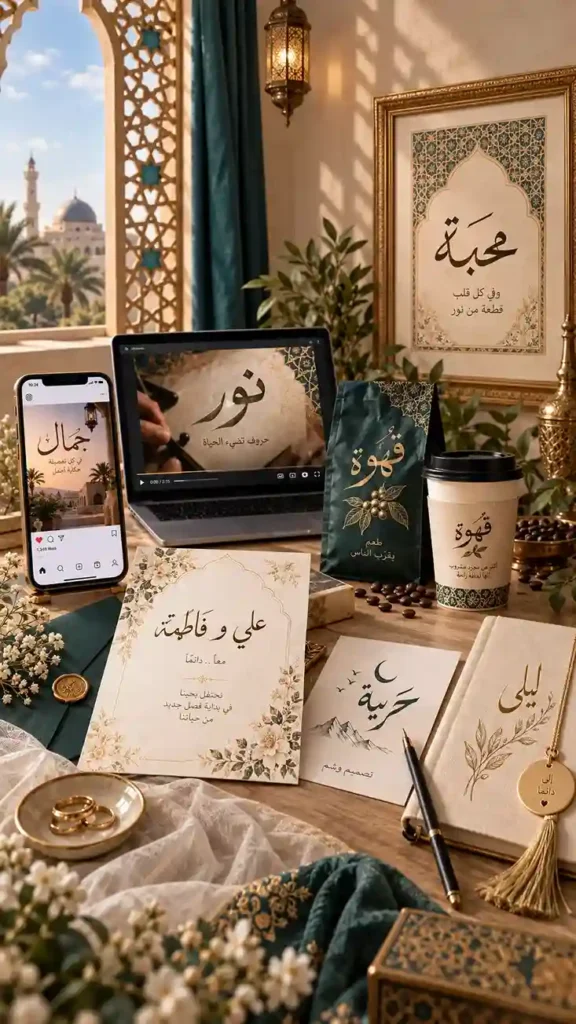
Arabic script has a natural elegance built into its shapes. Even plain typed text carries a flowing quality that Latin letters rarely match, which is part of why Arabic typography has always been treated as an art form rather than just a way to communicate. Social media is probably the most common place people apply this kind of styling, and for good reason. A caption or quote rendered in an elegant calligraphy style tends to stop the scroll far more effectively than plain typed text sitting on a plain background, which is why designers and content creators lean on tools like this so often for Instagram posts, YouTube thumbnails, and Pinterest graphics.
Brands use it too, especially for logos and product packaging aimed at Arabic speaking audiences, since a well chosen font can carry as much meaning as the words themselves. A coffee shop and a law firm would reach for very different styles even if they were writing the exact same word.
Beyond marketing, stylish Arabic text shows up in more personal places that often matter even more to the person creating them. Wedding invitations, religious quotes framed for a living room wall, tattoo designs, and personalized gifts with a name written in flowing calligraphy are all common uses people search for.
Because the process online now takes only a few minutes instead of days, people who once had to hire a calligrapher for these small, personal projects can design something meaningful entirely on their own, and still walk away with a result that looks intentional, polished, and worth printing or sharing.
Frequently Asked Questions
Do I need to know Arabic to create stylish Arabic text?
No. Most generators let you type in English and translate automatically, or paste Arabic text you already have if you’d rather control the exact wording yourself.
What's the actual difference between a font and calligraphy?
A font is a fixed digital typeface applied consistently to any text, while calligraphy traditionally refers to hand drawn lettering with variation in every stroke. Online tools bridge the two by offering fonts modeled closely on real calligraphy styles, so the result still carries that handmade feel.
Can I use these designs for commercial projects?
It depends on the specific tool and its licensing terms, so it’s worth checking whether a design is free for commercial use before publishing it on a product, a website, or paid marketing material.
Which style works best for something formal, like a wedding invitation?
Diwani and Thuluth are popular choices for formal occasions because of their flowing, decorative appearance, while Naskh tends to work better for the more practical, readable parts of the same invitation.
Do I need design software to get a good result?
Not really. Most of the styling, from picking a font to adjusting colors and backgrounds, happens within the generator itself, so basic tools are usually enough unless you want to layer the export into something more complex afterward.
What file formats can I download once the design is finished?
Common options include PNG for social media and everyday sharing, JPG for general use, and SVG when you need a version that scales cleanly for print or large displays without losing quality.