Arabic Tattoo Fonts: How to Choose the Right Style & Avoid Mistakes
Arabic script has become one of the most requested styles in tattoo studios around the world. The flowing letters, the connected strokes, and the sense of meaning behind every word make it feel personal in a way that plain English text often doesn’t.But Arabic tattoos are also one of the easiest things to get wrong. This guide walks through how to pick a style that actually works and how to avoid the mistakes that show up again and again.
Why Arabic Script Needs Extra Care
It Reads Right to Left
Arabic flows from right to left, and this trips up a lot of people designing a tattoo for the first time. If a design is mirrored, flipped, or laid out the way an English word would be, the final result can end up unreadable or even reversed.
Fonts Are Not All Equal
Some Arabic fonts are built for screens and documents, while others are made to look like handwritten calligraphy. A tattoo usually needs a style that stays clear at a small size and holds its shape as skin ages, so not every font that looks beautiful on a phone screen will translate well onto skin.
Choosing a Style That Matches the Meaning
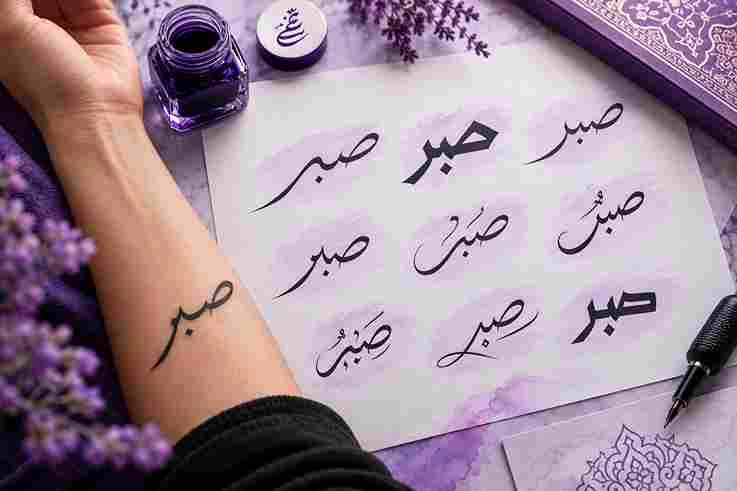
The right Arabic font depends heavily on what the tattoo is meant to say. A short religious phrase often looks best in a classic, rounded Naskh style, since it feels traditional and calm. A modern word or a single name might suit a bolder, more geometric look instead. Trying a few different options side by side, such as through a tool like the Arabic Calligraphy Generator, makes it much easier to see how a phrase will actually look before committing to it.
The Arabic font generator lets you
The Arabic font generator lets you type or paste Arabic text and preview it instantly across a range of Arabic font styles — modern, traditional Naskh, Kufi-inspired, handwriting and decorative. Adjust the color, background, size and alignment, then download your design as a high-quality PNG or JPG image.
This tool created-paste text tool instead.
Common Mistakes People Make With Arabic Tattoos
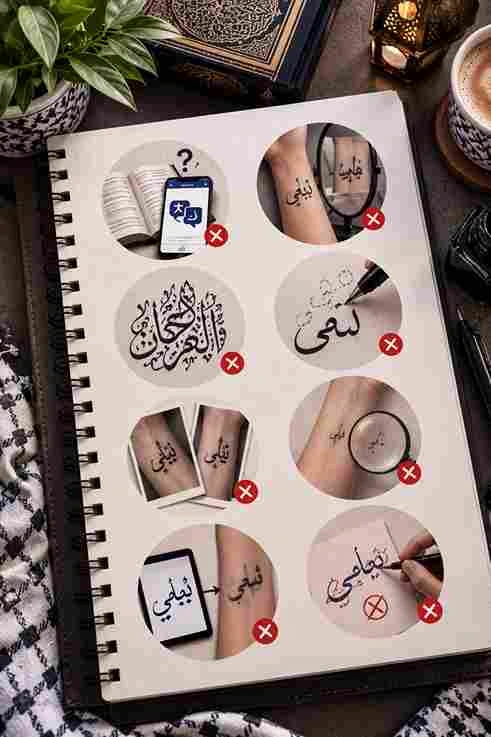
- Translating word by word instead of by meaning, which often produces a phrase that makes no sense in Arabic
- Using an online translator without checking the result with someone who actually reads Arabic
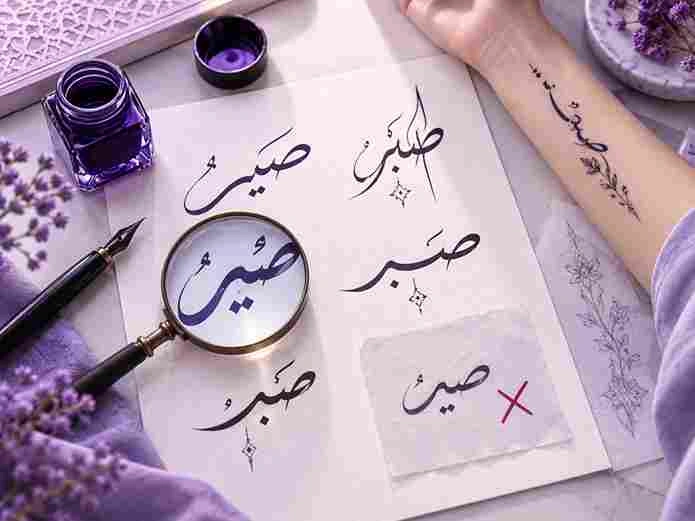
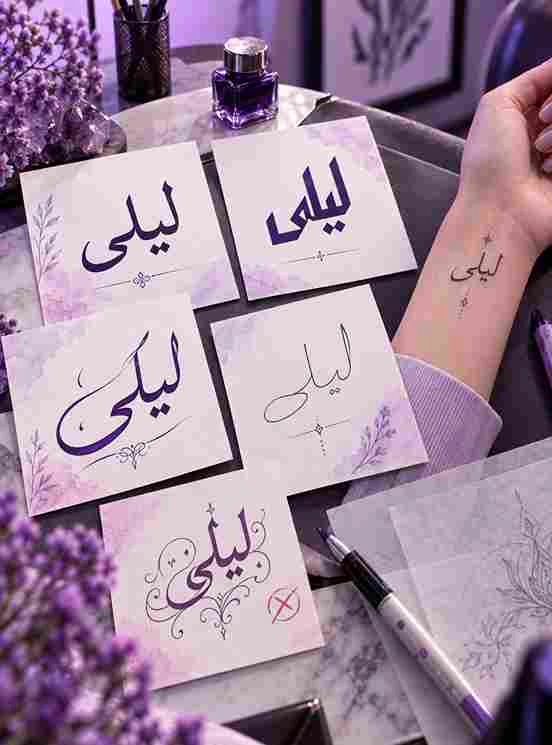
- Picking a decorative font that looks nice on screen but becomes illegible once inked
- Getting the letters mirrored or reversed because the design wasn’t checked for right to left flow
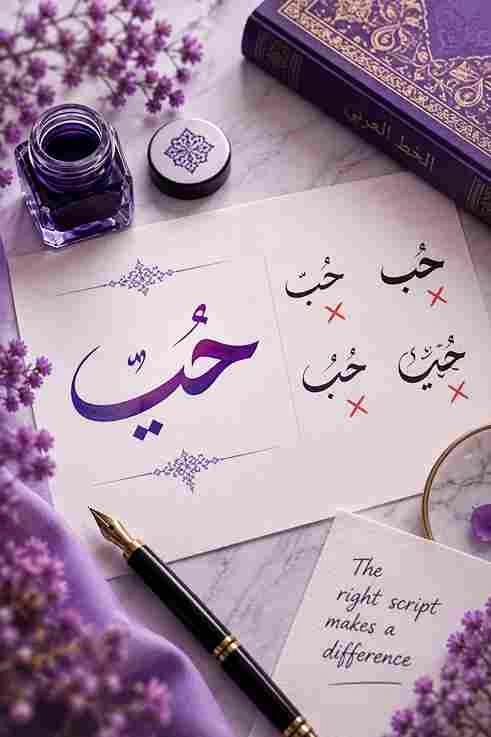
- Leaving out diacritical marks that are needed to keep the meaning of the phrase intact
- Copying a design from someone else’s tattoo without knowing if the spelling was even correct
- Choosing a size too small for the amount of detail in the chosen script
- Skipping a final proofread before the appointment, when a quick check could have caught the error
Arabic is not just a different alphabet, it is a completely different writing system. Letters change shape depending on where they sit in a word, and almost every letter connects to the one next to it. This is very different from English, where each letter keeps the same form no matter where it appears.
Getting Your Design Ready Before the Appointment
Once a phrase and a style are chosen, it helps to see the actual text rendered clearly rather than relying on a screenshot from somewhere else. Typing the phrase out and comparing it across a few different fonts makes it much easier to spot anything that looks off before it becomes permanent.
If the starting point is an English name or word rather than Arabic text, converting it accurately matters just as much as the font choice. Tools such as the English to Arabic Font Generator can help turn a name into proper Arabic script, which is often more reliable than a rushed manual translation.
It’s also worth keeping a clean, copyable version of the final text on hand for the tattoo artist, separate from any styled image. The Arabic Copy & Paste tool is useful here, since it keeps the actual Arabic characters intact without the font styling getting in the way. For a broader look at how different scripts compare before deciding on one, the Arabic Font Styles guide is a good place to start.
Frequently Asked Questions
Is it safe to use Google Translate for a tattoo phrase?
Not on its own. Machine translation can miss context, grammar, and tone, so any phrase should be double checked by someone fluent in Arabic before it’s used permanently.
What is the best Arabic font style for a small tattoo?
Simpler, rounded styles like Naskh tend to hold up better at small sizes than heavily decorative or highly detailed scripts.
Can a tattoo artist read Arabic if they don't speak the language?
Many can copy shapes accurately, but it’s still best to bring a clear, correctly spelled reference so nothing gets distorted during the stencil process.
Do Arabic tattoos need diacritical marks?
Sometimes. Certain phrases change meaning without them, so it’s worth checking whether the specific words require these marks to stay accurate.
How can I check if my Arabic tattoo text is correct before getting inked?
Compare the text across a few trusted sources, ask a fluent speaker to review it, and preview it in more than one font to make sure nothing looks reversed or oddly spaced.